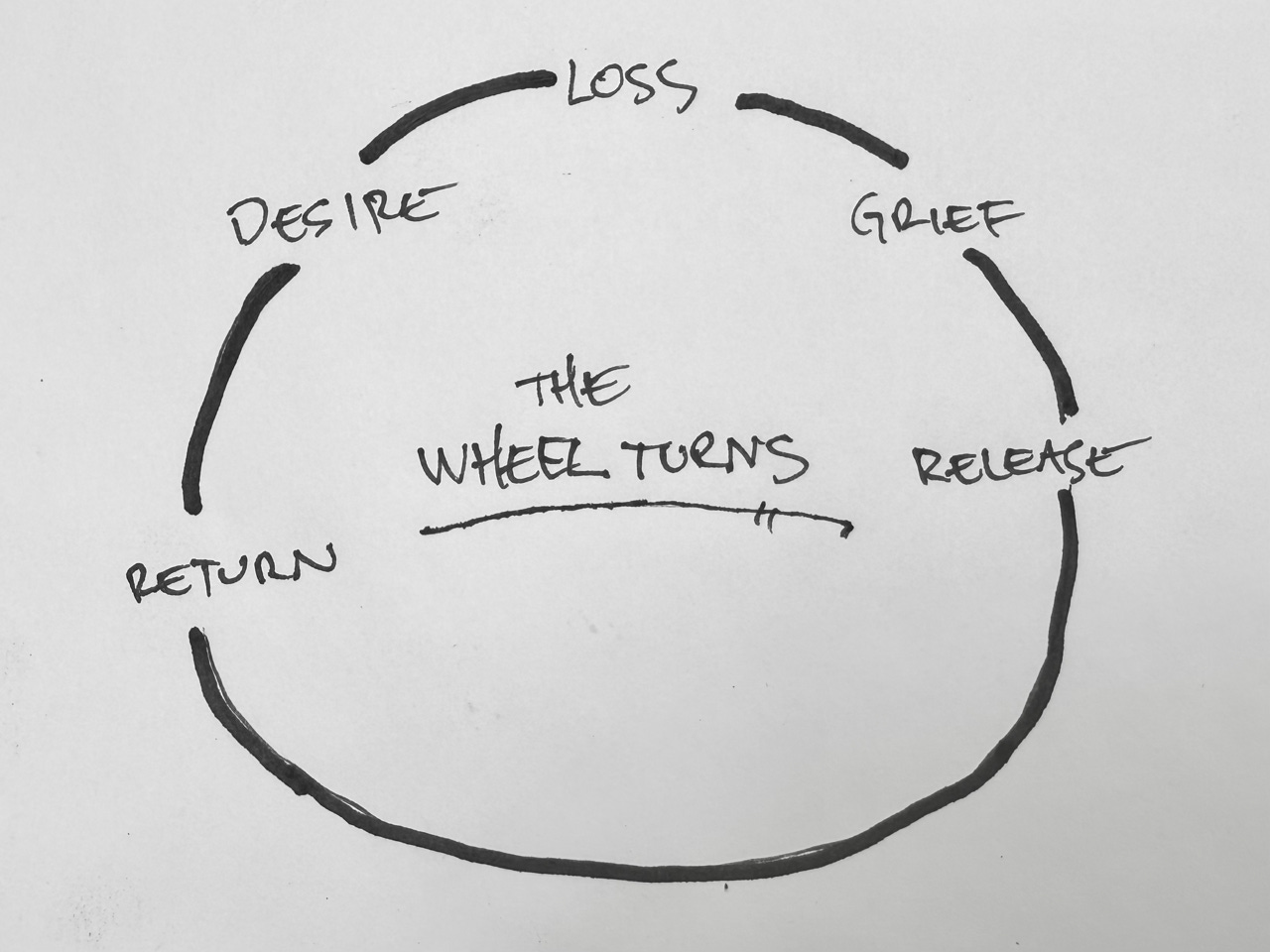
In Buddhist philosophy, one of the first truths is called dukkha. That dissatisfaction, loss, and suffering are woven into ordinary life.
Not that life is only pain. But that pain is an unavoidable part of it.
The second truth is that there is a cause to suffering. And it’s us: wanting things to be other than they are. Clinging to control, identity, outcome, or the hope that something will stay fixed when it cannot.
The third is that there is relief from suffering. Not by rearranging the world, but by changing our relationship to it. Since suffering is caused by us, it can be undone by us.
So grief, then, is a season within suffering. And it takes many forms.
Sudden or slow. Loud or quiet. Immediate…or delayed by years.
I’m not interested in simplifying it. But its shape is consistent. Grief lives, exactly, in the tension between control and reality.
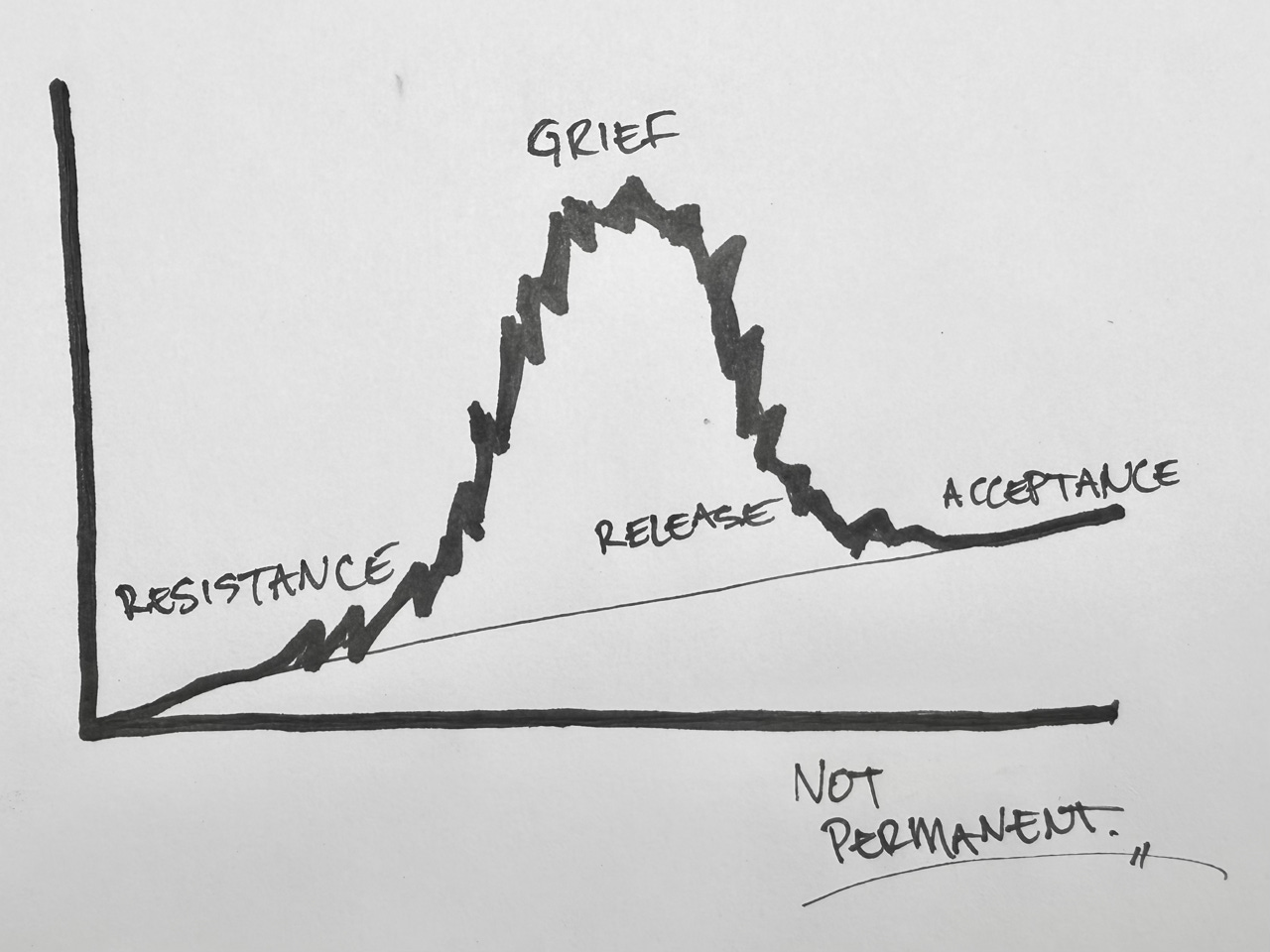
It is the moment when what we want collides with what is.
When the mind searches for leverage where none exists. When the instinct to fix, recover, or restore meets something that cannot be undone.
Sometimes our resistance isn’t chosen. It’s reflex.
We try to control through explanation. Through activity. Through distance. Through distraction. We say we’ll deal with it later. That it will soften on its own. But grief doesn’t disappear when avoided.
It waits.
What prolongs suffering is not grief itself, then, but our attempt to control what we cannot.
The lesson for us to learn, again and again, is that grief begins to change when we loosen our grip. Not because the loss stops mattering. But because the fight with reality does.
The pain doesn’t vanish. The struggle around it does.
So grief isn’t something to solve. Just pass through. And while it reshapes us, it does not consume us forever.
Life moves again. Not as it was.
But forward nonetheless.